
How Klar Achieved 32% Higher ROAS with Predictive LTV Signals





By the numbers
Overview
Company
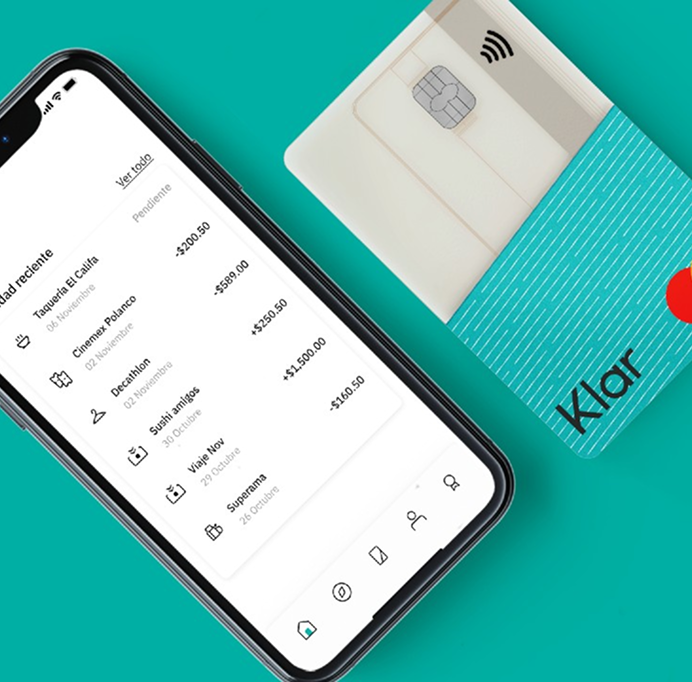
Klar is the leading digital financial services platform in Mexico, providing services including credit cards and loans for consumers
Industry
Fintech
Headquarters
Mexico City, Mexico
Campaign Type
Google App Campaigns
Snapshot

In fintech, everything comes down to acquiring the right customers while maintaining efficiency at scale. Voyantis’s AI-powered predictive growth platform delivers on both - accurate predictions, signal engineering tailored to how Google actually learns, and a team that understands the intersection of data and paid media. It's a rare combination that’s hard to replicate in-house.
Fresh off its Series C, Klar had built a strong acquisition engine optimizing campaigns for consumers approved for a credit card. But the team knew they could get even more precise, because approvals don't always drive revenue. Credit card usage does.
The challenge was that Google's ad optimization depends on a quick feedback loop: show an ad, learn who converts, and find more users like them. That loop closes after 7 days, while card usage happens months later. The algorithm never learns which users actually deliver value.
Klar enlisted Voyantis to close the gap, building predictive signals that teach Google what a valuable user looks like before the platform can see it for itself.
Impact at a glance
Validated a predictive LTV approach
with 15% increased ARPU, 32% increased ROAS, and a 25% reduction in CAC
Built for scale
with platform-specific signal engineering
Continuous model adaptation
as Klar's business evolves without starting from scratch
Faster time-to-value
leveraging expertise from thousands of campaigns and experiments to avoid the trial-and-error of in-house buildout
The challenge
Klar was running tCPA campaigns optimizing for users approved for a credit card, because approvals offered ad platforms quick feedback to learn from. But the users who actually drove revenue were those who started spending, which typically occurred weeks or months after the optimization window.
Klar knew they needed to shift from optimizing for approvals to optimizing for value. But as a rapidly-scaling fintech, their business was a moving target: approval criteria changed, risk models updated, and KPIs evolved. Each shift meant retraining models and rethinking signal strategy.
Even with a model in hand, translating predictions into something Google can actually learn from is its own discipline - one that takes years and significant ad spend to figure out through trial and error.
Klar needed agility, dedicated resources, and deep platform expertise. That's where Voyantis came in.
The solve
We didn't have time to figure this out through trial and error. Every platform has its own quirks and its own signal requirements. Learning that from scratch would have taken us years. Voyantis had already run the experiments we would have needed to run, across dozens of advertisers. That got us to results faster than we could have done in-house.
Klar had a robust, cross-channel UA strategy. Because every platform and channel has different signal ingestion methods, attribution windows, and algorithmic responses, the Voyantis team set their sights on cracking Google UAC first. Here’s how they tackled it:
Define the North Star metric
The team dug into the data to identify at what point in the customer journey they could effectively determine whether a user would become valuable. For Klar, this was LTV after 120 days - the point by which most users who will ever make a payment have done so. Looking beyond approval to users more likely to generate revenue became the true measure of success.
Build custom predictive models
Voyantis built a predictive model trained on Klar's unique, anonymized data, including risk scores, revenue patterns, credit limits, employment data, device signals, and more, to predict 120-day LTV for each user within hours of first engagement.
Engineer platform-native signals
A predictive model alone isn't enough. Platforms like Google and Meta were trained on deterministic data (conversions, purchases, sign-ups, etc.) and don't natively understand probabilistic values. You can't just send Google a predicted LTV value and expect results.
Voyantis' signal engineering expertise translated Klar's predicted LTV into platform-native signals Google's algorithm could actually learn from - respecting the platform’s specific requirements around signal timing, cadence, and value encoding.
Validate with a rigorous geo A/B test
The team ran an A/B geo test in Mexico. The control group continued running tCPA campaigns optimizing for credit-approved users. The test group shifted to value-based bidding (VBB) powered by Voyantis signals, letting Google optimize toward predicted LTV instead of approvals.This allowed for clean measurement of incremental impact. The test proved they could drive higher quality users while reducing acquisition costs, creating room to reinvest and scale.
Voyantis’ impact
32%
increase in ROAS
25%
reduction in CAC
15%
increase in ARPU
The foundation for cross-channel expansion
With the geo test validating that predictive growth delivers higher quality users while maintaining volume and reducing costs, Klar is now migrating their full UAC budget to Voyantis signals.
Next up, Performance Max. Unlike the initial UAC buildout, the team won’t be starting from scratch. While Voyantis will engineer new signals tailored to each platform's unique learning logic, Klar benefits from a faster, more informed experimentation process built for scale.
And as Klar's business evolves, Voyantis evolves with them, providing infrastructure to accelerate growth for ambitious teams.